
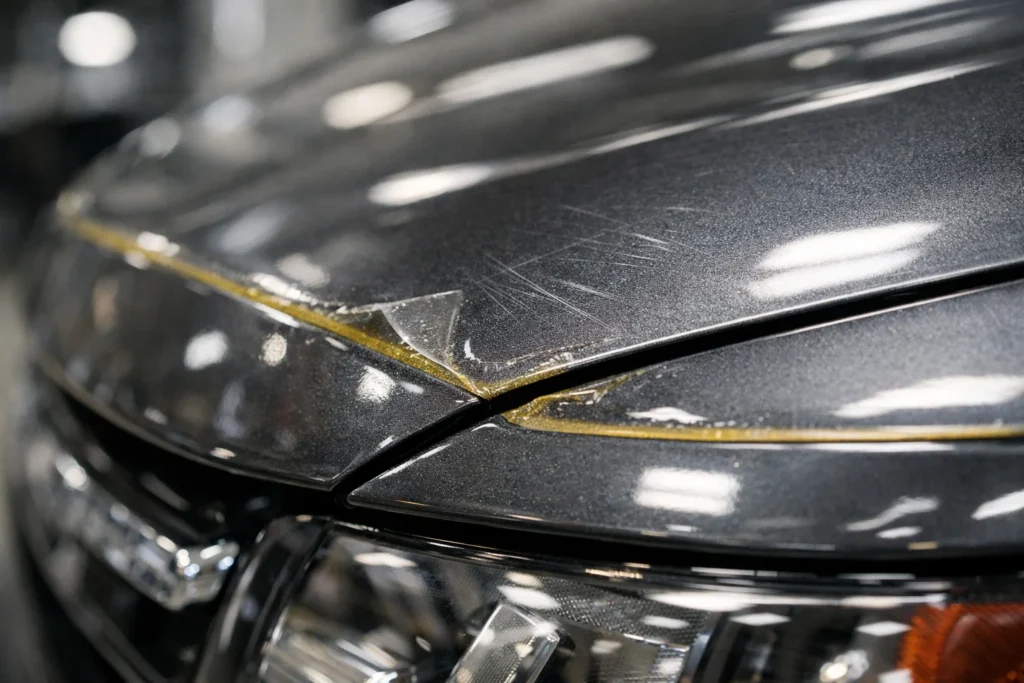
Paint Protection Film problems usually include yellowing, peeling, scratches, and edge lifting caused by UV exposure, poor installation, or low-quality film. Most issues are preventable with professional installation, proper maintenance, and choosing a high-quality self-healing PPF designed for long-term durability.
Key Takeaways
- PPF yellowing is mainly caused by UV exposure and low-quality film
- Paint protection film peeling often results from poor installation
- PPF scratches are common but many films have self-healing properties
- Proper care significantly increases how long PPF lasts
- Choosing professional PPF installation prevents most long-term issues
Understanding Common Paint Protection Film Problems
Although PPF is designed to protect your vehicle’s paint, several common PPF problems can appear over time if the film quality or installation standards are compromised. Understanding these issues helps car owners take preventive action early.
Paint protection film is a transparent polyurethane layer applied to vehicle surfaces to protect paint from scratches, stone chips, UV exposure, and environmental damage.
PPF Yellowing Problem: Causes & Prevention
Why Does PPF Turn Yellow?
One of the most frequent questions is why does PPF turn yellow. This happens due to prolonged UV exposure, oxidation, and inferior adhesives used in low-grade films. Over time, paint protection film yellowing becomes noticeable, especially on white or light-colored cars.
PPF Discoloration Causes
- Continuous sunlight exposure
- Low-quality TPU material
- Lack of UV-resistant top coating
- Improper maintenance
Yellow PPF on Car: How to Avoid It
Using UV-resistant films and following proper PPF maintenance tips significantly reduces the risk of yellow PPF on car surfaces.
Note: High-quality films with advanced coatings resist discoloration far better than budget alternatives.
Paint Protection Film Peeling & Edge Lifting Issues
Paint Protection Film Peeling Explained
Paint protection film peeling usually starts at corners or edges. This occurs when surface preparation is poor or when adhesive bonding is weak.
PPF Lifting from Edges
PPF lifting from edges is often a sign of rushed installation or contamination during application. Once lifting begins, dirt and moisture can cause further damage.
PPF Coming Off Car: When to Act
If you notice PPF coming off car panels, immediate reinstallation is recommended to prevent paint damage underneath.
Alert: Ignoring peeling can trap moisture, leading to permanent paint defects.
PPF Scratches: Are They a Real Concern?
Can PPF Get Scratched?
Yes, can PPF get scratched—especially from debris, improper washing, or harsh chemicals. However, scratches usually affect the film, not the paint.
Scratched Paint Protection Film
A scratched paint protection film is doing its job by absorbing impact. Most surface-level scratches disappear on their own.
Self-Healing PPF Scratches
Premium films feature self healing PPF scratches technology that uses heat to restore the surface automatically.
Success Tip: Park in sunlight or apply warm water to activate the self-healing layer.
PPF Installation Problems & Their Impact
Most long-term PPF installation problems stem from inexperienced installers. Misalignment, air bubbles, and weak edge sealing reduce film lifespan and appearance.
Choosing professional PPF installation ensures correct tension, clean edges, and optimal adhesive bonding.
How Long Does PPF Last with Proper Care?
When installed correctly and maintained well, car owners often ask how long does PPF last—the answer is typically 5 to 10 years depending on usage, environment, and film quality.
Following routine washing techniques and avoiding abrasive chemicals greatly improves durability.
Best Practices to Prevent Paint Protection Film Problems
Using the best paint protection film with advanced coatings and opting for a self healing PPF film minimizes most risks. Regular inspections and gentle cleaning keep the film performing at its best.
Best Practices to Prevent Paint Protection Film Problems
Following proper PPF maintenance tips such as gentle washing, avoiding harsh chemicals, and regular inspections can significantly reduce common paint protection film problems like yellowing and peeling.
Why nanotekppf.com Is the Smarter Choice
If you’re looking to avoid recurring paint protection film problems, choosing a trusted provider matters. nanotekppf.com offers advanced PPF solutions engineered to resist yellowing, peeling, and scratches.
Their premium films combine UV resistance, strong adhesive bonding, and self-healing technology—making them ideal for long-term vehicle protection.
Protect Your Car the Right Way
Avoid paint protection film problems like yellowing, peeling, and scratches by choosing premium-quality PPF and expert installation. Discover advanced self-healing solutions designed for long-lasting protection.
Explore Premium PPF SolutionsFinal Thoughts
Most paint protection film problems are not product failures but installation or maintenance issues. With the right film, expert installation, and proper care, PPF remains one of the most effective ways to preserve your vehicle’s original paint.
FAQs – Paint Protection Film Problems
The most common paint protection film problems include yellowing, peeling, scratches, and edge lifting. These issues usually occur due to poor installation, low-quality film, or lack of proper maintenance over time.
PPF turns yellow mainly because of UV exposure, oxidation, and inferior materials. High-quality films with UV-resistant coatings significantly reduce paint protection film yellowing.
Yes, many modern films feature self-healing technology. Light scratches on a scratched paint protection film often disappear with heat from sunlight or warm water.
Prevent paint protection film peeling by choosing professional PPF installation, ensuring proper surface preparation, and avoiding harsh washing methods during the first few weeks.
When properly installed and maintained, paint protection film typically lasts between 5 to 10 years, depending on driving conditions and environmental exposure.
Yes, self-healing PPF film is worth it for long-term protection. It automatically repairs minor scratches, maintaining a clean appearance and extending the film’s lifespan.
Absolutely. Professional PPF installation minimizes edge lifting, peeling, and premature wear, ensuring optimal performance and durability.