

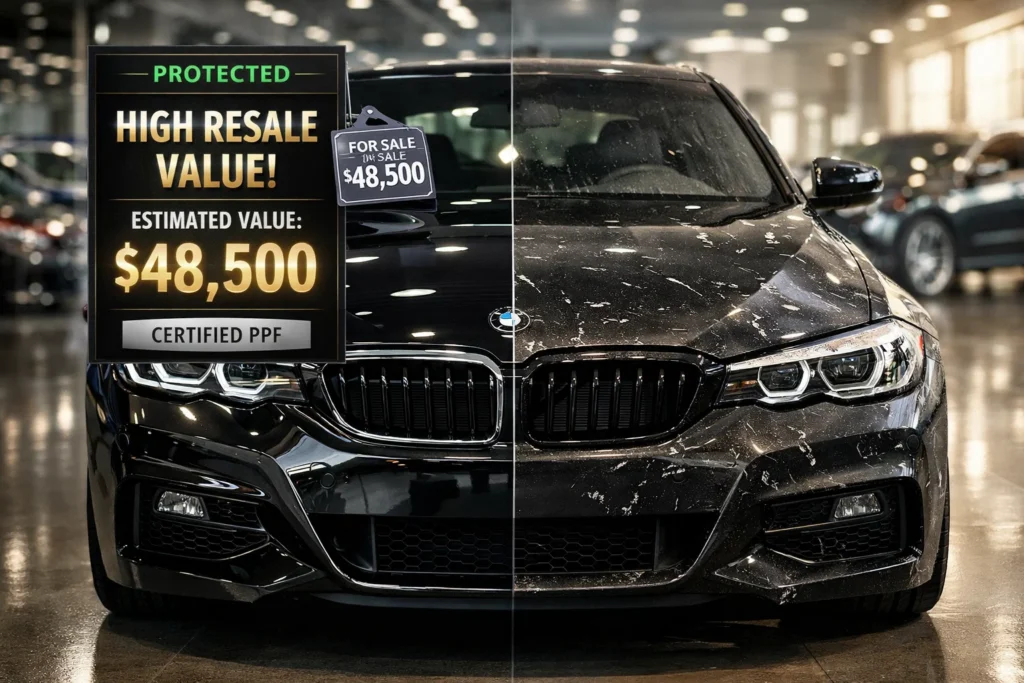
PPF for car resale value works by shielding your vehicle’s paint from scratches, stone chips, UV damage, and stains. This automotive paint protection keeps the exterior looking newer for longer, helping maintain vehicle resale value and making your car more attractive to buyers when it’s time to sell.
Key Takeaways
- Paint Protection Film (PPF) prevents visible paint damage
- A protected exterior helps increase car resale value
- Buyers prefer vehicles with well-maintained paintwork
- Automotive paint protection slows depreciation
- PPF helps preserve car exterior condition long term
Why Exterior Condition Matters in Resale
When selling a vehicle, first impressions strongly influence price negotiations. A car with faded paint, scratches, and chips signals wear and potential neglect. On the other hand, a glossy, damage-free finish suggests proper care, which helps maintain vehicle resale value.
Modern buyers inspect body panels closely. Even small defects reduce perceived value. This is where car paint protection film becomes a financial decision rather than just a cosmetic one.
How Paint Protection Film (PPF) Protects Value
Protection from Everyday Damage
Road debris, stones, and minor impacts are common causes of paint deterioration. Paint Protection Film (PPF) acts as a physical barrier, absorbing impacts before they reach the paint surface.
Self-Healing Surface Technology
High-quality PPF uses elastomeric polymers that allow light scratches and swirl marks to disappear with heat. This keeps car paint looking like new without repainting costs.
UV and Environmental Resistance
Sun exposure fades paint and causes oxidation. PPF provides UV stability, preventing discoloration and helping preserve car exterior condition over time.
Info Box:
Cars with protected original paint often command better resale prices than vehicles with repaint work, because buyers trust factory finishes more than refinished panels.
Financial Benefits of PPF for Car Owners
| Without PPF | With PPF |
|---|---|
| Visible chips and scratches | Cleaner, protected paint |
| Faster exterior aging | Slower depreciation |
| Lower buyer confidence | Higher resale appeal |
| Possible repaint expenses | Original paint preserved |
Automotive paint protection reduces long-term repair costs and supports car value protection when selling or trading in the vehicle.
PPF vs Repainting Before Sale
Repainting panels may hide damage but often raises buyer suspicion about accidents. In contrast, PPF for car resale value maintains factory paint, which is a major trust factor in the used car market.
How PPF Increases Buyer Confidence
Visual Appeal
Shiny, flawless paint draws attention immediately.
Perceived Maintenance
A protected exterior implies careful ownership.
Lower Future Costs
Buyers expect fewer paint corrections after purchase.
Together, these factors help protect car resale price and strengthen negotiation power.
Choosing a Quality PPF Installer
Professional installation ensures film clarity, durability, and proper adhesion. Poorly installed film can peel or discolor, reducing benefits. Always choose experienced automotive paint protection experts using premium PPF film.
Why Nanotek PPF Is a Smart Choice
For drivers seeking reliable protection, nanotekppf.com offers advanced Paint Protection Film (PPF) engineered for clarity, durability, and self-healing performance. Their premium solutions help keep car paint like new while supporting long-term resale value and exterior preservation.
Protect Your Car’s Value Before It Drops
Discover premium Paint Protection Film solutions designed to keep your car looking new and protect its resale value.
Explore Nanotek PPFFinal Thoughts
Protecting your vehicle isn’t only about appearance it’s a financial strategy. PPF for car resale value ensures your car remains attractive, well-maintained, and desirable in the second-hand market, helping reduce depreciation and maximize return when you sell.
FAQs About PPF for Car Resale Value
Yes. By preventing scratches, chips, and fading, Paint Protection Film (PPF) keeps the exterior in better condition. Buyers are willing to pay more for cars with original, well-preserved paint, which directly supports higher resale prices.
Ceramic coatings add gloss and hydrophobic properties, but PPF provides physical impact protection. For maintaining vehicle resale value, PPF is more effective because it prevents stone chips and scratches that coatings cannot stop.
High-quality car paint protection film can last 5–10 years depending on environment and maintenance. Its durability helps preserve car exterior condition long term, making it beneficial for owners planning to sell later.
Serious buyers often see PPF as proof of careful ownership. It signals that automotive paint protection was prioritized, increasing confidence in the vehicle’s overall condition and history.
PPF significantly reduces common damage like chips, scratches, and UV fading, but extreme impacts may still affect the surface. However, it dramatically lowers repair needs and helps protect car resale price.
When professionally installed and removed, PPF does not harm factory paint. In fact, it reveals preserved paint underneath, which can positively influence resale inspections.